What is a cleanout and why does the plumber keep asking if I have one?
A cleanout is a capped pipe fitting that gives a plumber direct access to the sewer line. It usually looks like a round plug, three or four inches across, sitting on a short stub of pipe. You will often find one in the basement near the main stack, in a crawlspace, along an outside wall or in the yard near the foundation.
The plumber asks because it decides how the job is done. With a cleanout, a cable machine or hydro jetter goes straight into the line. Without one, the equipment has to go in through a toilet, a floor drain or the roof vent. That can mean pulling a toilet, and it limits how far the machine travels and how well a camera can see.
Safe homeowner check: find the cap and note where it is. Do not unscrew it if the house drains are backed up. Water can be standing behind the cap, and it will come out.
Stop running water and call now if the cleanout is wet or leaking, or if several drains in the house are backing up together. That points to a blockage in the main line.
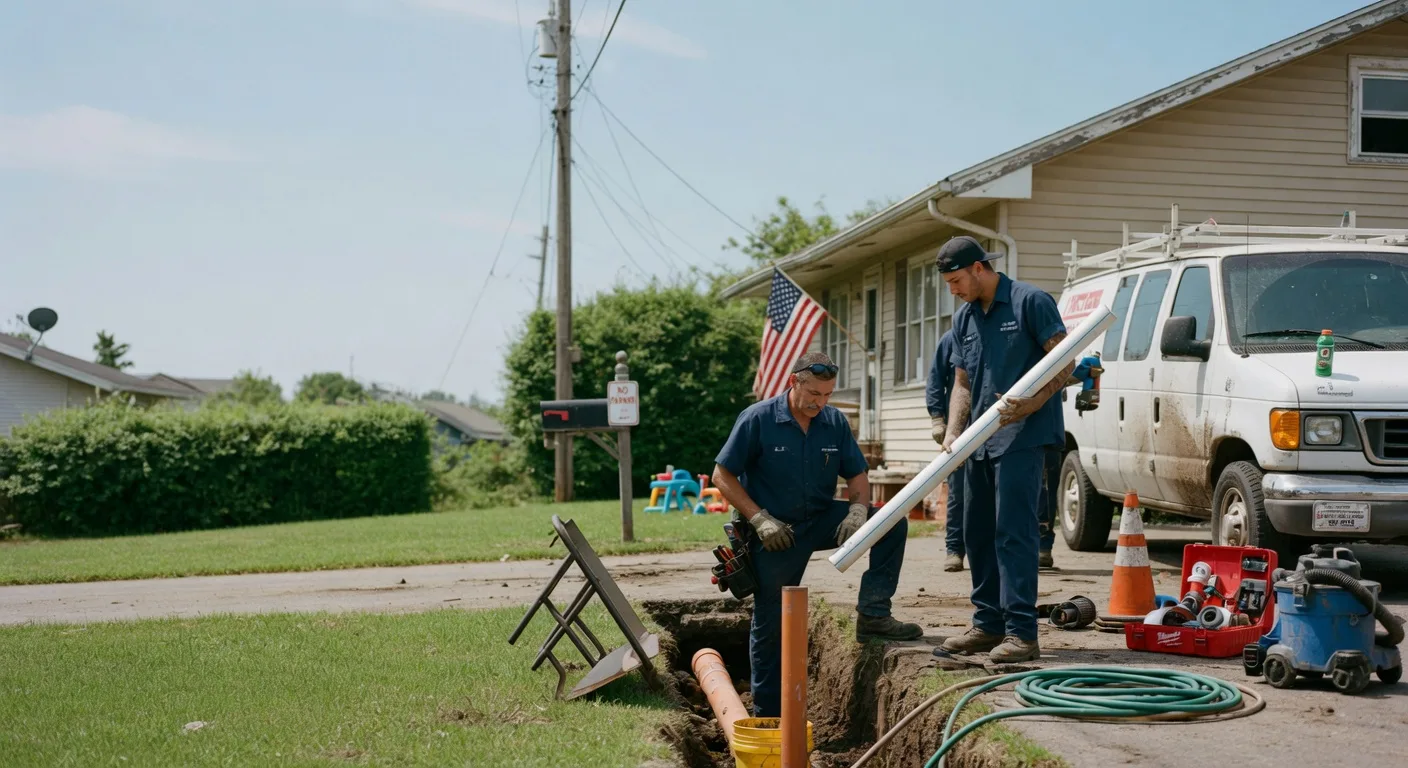
If your home has no cleanout, adding one is often part of the job. What it costs depends on access, how deep the line is, how much has to be dug or cut open, and whether a permit applies.
Expert Plumbers Co is a referral service. Call (380) 262-9173 and we will connect you with a plumber serving Lytle Creek, CA for Drain Cleaning.
A few practical points help when a cleanout is involved. The cap can be stuck from years of rust or paint, and forcing it with a long wrench can crack the fitting, so leave a stubborn one to the plumber. Keep the area around it clear of storage, snow, soil or landscaping so the crew can reach it quickly. In older homes the cleanout may have been buried when the yard was regraded, or covered by a patio or flooring, and finding it can take some probing. Newer homes usually have one near the foundation or at the property line, sometimes with a green or black cap flush with the lawn. If a plumber can find or install one, later cleanings and camera inspections become simpler and less disruptive, because the equipment enters the line at a planned point and nothing indoors has to be disturbed or removed.
We had roots cut out of our sewer line a year ago and now it is backing up again. What actually stops them coming back?
Cutting does not stop roots. It clears the pipe so water can pass, but the roots are still alive outside it and they grow back through the same opening. A year is a fairly typical time for a line to fill up again, and sometimes it is faster.
Roots get in where the pipe is not sealed: a joint that has shifted, a hairline crack, a broken section. Tree roots follow moisture, and a sewer pipe leaks a little water and vapor, which draws them in. As long as the entry point is open, regrowth is only a matter of time.
What actually removes the cause is closing that opening. There are three common routes, and the right one depends on what a camera inspection shows.
A spot repair fixes a single bad joint or short cracked section. It makes sense when the rest of the pipe is sound.
A liner is a resin-saturated sleeve that is cured inside the old pipe, sealing joints and cracks along its length. It suits pipes that are cracked or leaking at several joints but are still round and in place.
Replacement is the answer when the pipe is collapsed, badly offset, bellied or made of a material that has failed, such as clay in poor shape.
Chemical products poured into the line, or foaming treatments, may slow some regrowth but do not seal the entry point, so they are not a repair.
Safe checks you can do:
Note when the slow drains started and which fixtures are affected. Mention the earlier root cutting to the plumber, and the approximate date.
Stop running water and call now if sewage is backing up into the house.
If a full repair is not possible right away, scheduled cleaning before the next backup can manage the problem, though it stays a stopgap. Cost depends on how many entry points there are, depth and length, access around trees and hardscape, the method chosen and permits under local code. To be connected with an independent local plumber in Lytle Creek, CA, call Expert Plumbers Co on (380) 262-9173.
I rent out my place and the tenant says the drains are backing up. What should I ask them, and what should I arrange?
Start with a few plain questions, because the answers tell the plumber where the problem is before anyone arrives.
Ask the tenant which fixtures are affected. One slow sink or tub points to a clog in that fixture's own branch. If several drains are slow, or water rises in a tub or shower when the toilet is flushed or the washer empties, the main line is the likely culprit.
Ask when it started and what changed. Did it follow heavy rain, a laundry day, a large gathering, or a new habit such as flushing wipes? Ask whether there are gurgling sounds, a sewage smell, or water in a floor drain or basement. Ask whether anything has already been tried, especially chemical cleaners, since those are a hazard to whoever opens the pipe next.
Ask for photos or a short video of the fixtures. That is faster than a long phone call and helps if you are not living nearby.
What to tell the tenant right away: stop running the washer and dishwasher, go easy on the toilets, and do not pour cleaner down the drain. If sewage is coming up inside the home, or water is spreading across a floor, treat it as urgent and keep people and pets out of the wet area.
What to arrange: a plumber to clear the line and, if the same drain has failed before, a camera look at it. Offer the plumber the tenant's contact details and agreed times so access is not the delay. Ask whether the blockage was in the fixture branch or the main line, and whether the plumber thinks it was caused by tree roots, a sagging pipe or something that was flushed. That tells you whether it is a one-off or a repair item.
Keep notes: dates, photos, what the plumber found. Whether the cause is wear or misuse affects the conversation with the tenant, so write down what was seen rather than what was assumed. Check your lease and local rules for your own obligations.
Expert Plumbers Co can connect you with an independent plumber in Lytle Creek, CA for this: call (380) 262-9173.
I opened the cleanout and it is full of water. Which side of the cleanout is the blockage on?
You pulled the cap on the cleanout and instead of an empty pipe you are looking at standing water. That tells you something useful. Water sitting in an open cleanout means the blockage is downstream of it, toward the street. The pipe is backed up behind the stoppage, and the cleanout is just a window into it.
The reverse also holds. If the cleanout is dry and you still have backups inside the house, the blockage is upstream, between the cleanout and your fixtures.
The usual causes of a full cleanout are root intrusion at a clay joint, a bellied line that holds water and solids, grease build-up on the pipe wall, or a failed sewer lateral where the pipe has collapsed or shifted. Water that holds steady and drains slowly suggests a partial blockage. Water that rises when someone flushes suggests a full one.
One slow fixture is usually a problem in its own branch line. When every drain in the house is slow, gurgling or backing up, especially the lowest tub or floor drain, the main line is the problem. Gurgling at several fixtures can also mean a blocked vent stack, so mention it to the plumber.
Safe homeowner check: Stop using water in the house. Look at the water level in the cleanout without touching the cap again. Note whether it is rising, falling or steady, and which fixtures backed up first. Keep children and pets away from the area.
Stop running water and call now if sewage is coming up in a shower, tub or floor drain, if the cleanout water is rising, or if you smell sewage indoors. Never loosen a cleanout cap under pressure, because sewage can surge out with force. Do not flush or run the washer while you wait.
A cable machine is often enough for a soft stoppage such as paper, grease or roots in an otherwise sound pipe. Hydro jetting is the better tool when grease or scale coats the pipe wall and a cable only punches a hole through it. A camera inspection is the right step when the blockage keeps coming back, when water stands in the line, or when a bellied or broken pipe is likely.
Expert Plumbers Co is a referral service. We connect you with an independent local plumber in Lytle Creek, CA. Call (380) 262-9173.
Tell the plumber the cleanout is full and where it sits. Ask whether they will run a camera after clearing the line and show you the footage. The scope depends on access to the cleanout, how deep the blockage is, whether the pipe is damaged, and whether a repair means digging or a permit.
The plumber wants to pull the toilet to reach the line. Why would they do that?
You called about a slow drain, and now the plumber says the toilet has to come off the floor. It is actually a common and sensible move, and it is often the cleanest way in.
A cable or jetting hose needs a way into the line. The best entry is a cleanout, a capped pipe fitting on the main drain. Many houses do not have one, or it is buried, painted over or blocked by a wall. Without a cleanout, the toilet is usually the best access point in the house. Pulling it exposes the closet flange and gives the plumber a short, straight shot into the closet bend and then into the main. Going in through a sink or tub means tight turns and a trap, and the tool may never reach the real problem.
It matters most when the blockage is past the branch lines. Roots at a clay joint, a belly holding water, or grease further down the main sit well beyond the bathroom. A straight path lets the cable or jet hose get there with enough control to clear it and, if a camera is used, to see what the pipe looks like.
Think about whether it is one fixture or the whole house. If only the bathroom sink is slow, the plumber should work at that sink. If the toilets gurgle, the tub backs up and a floor drain bubbles, the problem is in the main, and pulling the toilet is a reasonable way to reach it.
Safe homeowner check: look in the basement, crawl space or outside wall for a capped cleanout fitting on the main drain, and tell the plumber where it is. Do not pull the toilet yourself unless you are comfortable with it. The bolts can seize, and the bowl is heavy.
Stop running water and call now if sewage is coming up in a tub or floor drain, if the toilet is overflowing, or if you smell sewer gas.
A cable machine is enough for a simple clog near the closet bend. Roots, a belly or heavy build-up usually call for a camera inspection first, and hydro jetting to clean the pipe wall.
Expert Plumbers Co is a referral service. We connect you with an independent local plumber in Lytle Creek, CA. Call (380) 262-9173.
Ask the plumber if a cleanout will be added so the next visit does not need the toilet pulled. Also ask about the new wax ring and any damaged bolts or flange, since the toilet must be reset and sealed afterward. Scope depends on access, parts, the condition of the floor around the flange, and any code requirement for adding a cleanout.